Integrating the Faroe Islands Flag Isolated on White into Professional Creative Workflows
Accessing high-quality, culturally accurate visual assets is a critical step in any design or communication workflow. When working with specific national symbols, such as the Faroe Islands Flag Isolated on White, the utility of the asset extends far beyond simple decoration. For professionals, educators, and creators, this specific 3D illustration serves as a functional component within a broader production pipeline. Understanding how to leverage this file format effectively ensures that projects ranging from corporate presentations to print-on-demand merchandise maintain both aesthetic integrity and technical precision.
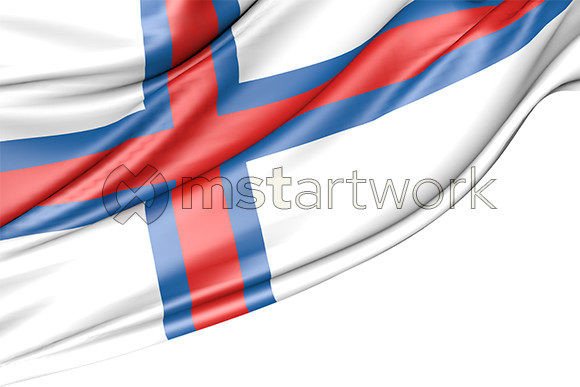
The asset in question is a high-resolution JPG file measuring 3840×2160 pixels. This specification places it firmly in the 4K UHD category, making it suitable for large-format printing and high-definition digital displays. The "isolated on white" characteristic is not merely a stylistic choice; it is a workflow enabler. By providing a clean background, the asset eliminates the need for time-consuming masking or rotoscoping, allowing designers to integrate the Faroese flag directly into complex compositions without compromising edge quality. This efficiency is vital when managing tight deadlines or batch-processing multiple cultural assets for international campaigns.
Technical Specifications and Workflow Compatibility
Before integrating the Faroe Islands Flag Isolated on White Background, 3d Illustration into a project, it is essential to understand its technical parameters relative to your output medium. The 3840×2160px resolution offers significant flexibility. In digital environments, this resolution ensures crisp rendering on Retina displays and 4K monitors, preventing the pixelation that often plagues web graphics scaled for modern hardware. For print workflows, this resolution supports high-DPI outputs up to approximately 13x7 inches at 300 DPI, or significantly larger formats at lower viewing distances, such as trade show banners or wall art.
While the JPG format is universally compatible, it requires specific handling during the pre-production phase. Unlike vector files, raster images like this one have fixed dimensions. Professionals should adopt a non-destructive editing approach. Always place the image as a Smart Object in Adobe Photoshop or a linked file in Illustrator/InDesign. This preserves the original pixel data and allows for scaling down without quality loss. If the project requires transparency, the white background must be removed. Because this is a 3D render rather than a flat graphic, standard magic wand tools may leave artifacts. Utilizing channel-based selection methods or AI-powered subject isolation tools yields cleaner edges that respect the lighting and shadows inherent in the 3D illustration style.
Color Management and Cultural Accuracy
The Faroese flag, known as Merkið, features specific shades of red and blue. When using a pre-rendered 3D illustration, color accuracy depends heavily on your workspace settings. Ensure your document color profile matches the intended output. For web and social media, work in sRGB to prevent color shifting across browsers. For physical products like t-shirts, mugs, or heat transfer paper, convert or proof in CMYK early in the process. The vibrant blues and reds of the flag can sometimes fall outside the printable gamut; soft-proofing allows you to adjust saturation before production, ensuring the final product respects the symbol's official appearance while maintaining the depth of the 3D render.
Applications in Digital Communication and Presentation
In the realm of digital communication, the Faroe Islands Flag Isolated on White functions as a versatile anchor element. For marketers and educators creating slide decks, the isolated white background allows the flag to sit seamlessly atop light-themed templates without awkward bounding boxes. However, its true value emerges in mixed-media layouts. The 3D nature of the illustration adds tactile depth to otherwise flat slides, helping to distinguish sections or highlight geographic data points regarding the North Atlantic region.
For social media managers and content creators, this asset streamlines the production of culturally relevant posts. Whether announcing a regional holiday, promoting tourism, or covering Nordic business news, having a pre-isolated, high-res asset reduces turnaround time. It can be layered over video backgrounds, integrated into Instagram Stories templates, or used as a focal point in LinkedIn carousels. The key to effective integration here is consistency. Pair the 3D flag with other dimensional elements or subtle drop shadows to ground it within the composition, ensuring it looks like a deliberate design choice rather than a pasted sticker.
Print-On-Demand and Merchandise Production
The specifications of this file make it particularly valuable for the print-on-demand (POD) sector. Entrepreneurs and small business owners utilizing platforms like Printful, Redbubble, or Etsy can leverage this asset for various products. However, successful POD implementation requires preparation beyond simply uploading the file.
- T-Shirt and Apparel Design: For dark garments, the white background must be removed entirely. For white garments, consider retaining a soft shadow beneath the flag to create a sense of realism against the fabric texture. Positioning is crucial; center-chest placements typically require resizing the 3840px width down to 3000-4000px depending on the garment size to avoid wrapping around seams.
- Mugs and Drinkware: The aspect ratio of 16:9 fits well on standard mug wraps. When designing for cylindrical surfaces, account for distortion. Place the flag centrally within the safe zone, ensuring the 3D perspective remains natural when the mug is viewed from eye level.
- Stickers and Decals: Die-cut stickers require a precise cut line. After isolating the flag, add a white stroke border (typically 2-4mm) to protect the intricate edges during cutting and peeling. The 3D shading translates exceptionally well to vinyl, giving the sticker a premium, embossed appearance even on flat material.
- Paper Products and Stationery: For greeting cards, scrapbooking kits, or posters, the high resolution allows for detailed close-ups. You might crop into the flag to focus on the cross detail for a textured background effect, utilizing the full 4K resolution to maintain clarity even when zoomed in 200%.
Workflow Integration for Crafters and Hobbyists
For hobbyists engaged in scrapbooking or heat transfer projects, organization is as important as creativity. Store the Faroe Islands Flag Isolated on White in a centralized digital asset library tagged with metadata (e.g., "Nordic," "Flag," "3D," "White Background"). This prevents redundant searching and ensures you always use the highest quality master file rather than a compressed screenshot. When preparing files for heat transfer paper, remember to mirror the image horizontally if using light-transfer paper. Test prints are mandatory; the 3D shading that looks dynamic on screen can sometimes print too dark on fabric. Adjusting brightness and contrast specifically for the transfer medium ensures the final craft project retains the vibrancy of the digital original.
Strategic Considerations for Long-Term Asset Use
Integrating this asset into your workflow also involves considering legal and ethical usage. While the design of a national flag is generally public domain, specific 3D renders are intellectual property created by artists. Professionals must verify licensing terms before commercial deployment. Using this asset for client work, merchandise sales, or monetized content requires appropriate commercial rights. Maintaining a record of the license agreement alongside the file protects your business from future compliance issues.
Furthermore, consider the longevity of the asset in your design system. Trends in 3D illustration evolve. While this current render meets modern standards, future projects may require updated aesthetics. Treat this file as part of a modular library. If you frequently work with Nordic themes, pair this flag with complementary assets (maps, landmarks, textiles) that share similar lighting and rendering styles. This creates a cohesive visual language across presentations, websites, and products, reinforcing brand professionalism and attention to detail.
Quality Control and Final Output Verification
The final stage of integrating the Faroe Islands Flag Isolated on White Background, 3d Illustration is rigorous quality control. Before publishing or printing, conduct a 100% zoom inspection to check for compression artifacts or jagged edges resulting from background removal. Verify color values against official specifications if the context demands strict protocol. For digital outputs, test across multiple devices to ensure the white isolation blends correctly with varying background colors. For physical products, order a sample proof. The transition from a backlit 3840×2160px screen to ink on cotton or ceramic involves variables that only physical verification can resolve. By treating this asset with professional rigor—from acquisition and preparation to execution and QC—you transform a simple image file into a reliable tool that enhances productivity and elevates the quality of your creative output.