Fantasy Elf in Purple Red Dress Graphics: Integrating High-Fidelity 3D Assets into Creative Workflows
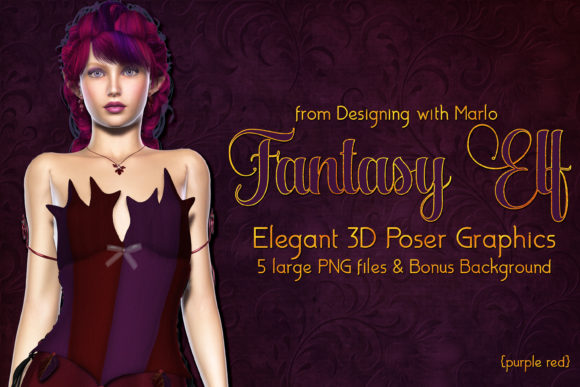
In the landscape of digital design and print media, the distinction between amateur and professional output often hinges on asset quality. Generic clip art lacks the depth required for modern branding, while custom 3D rendering demands technical expertise and significant time investment. The Fantasy Elf in Purple Red Dress Graphics package bridges this gap by providing pre-rendered, high-resolution 3D assets that integrate seamlessly into existing creative pipelines. This resource is not merely a collection of images; it is a functional design component intended to elevate greeting cards, invitations, fantasy artwork, labels, business cards, websites, and social media advertising through superior visual fidelity.
Understanding where these assets fit within a broader production schedule is essential for maximizing their value. Unlike standard flat graphics, these poser files possess a layered look with realistic shadows and varied lighting conditions. This specific aesthetic requires a deliberate approach to composition and layout. Whether you are a freelance designer managing multiple client revisions or a small business owner creating seasonal marketing materials, integrating these life-like 3D style graphics involves specific preparation, execution, and quality control measures to ensure they enhance rather than complicate your workflow.
Technical Specifications and Asset Preparation
Before opening a design file, it is necessary to understand the technical parameters of the Fantasy Elf in Purple Red Dress Graphics. The package includes five large posed graphics, each measuring 2500 pixels in height. This resolution is critical for cross-platform compatibility. At 300 DPI, a 2500-pixel height allows for approximately 8 inches of vertical print space without interpolation artifacts, making these assets suitable for standard invitation sizes, book covers, and product packaging. For web use, this resolution provides ample headroom for retina displays and responsive scaling.
The transparent .PNG file format is the industry standard for non-destructive editing. Transparency preserves the complex alpha channels generated during the 3D rendering process, particularly around hair strands and fabric folds. When preparing these files for a project, avoid converting them to JPEG or flattening layers prematurely. Maintaining the transparency ensures that the built-in shadows interact correctly with your background elements. The inclusion of a bonus 3000 x 2000 pixel JPG background serves as both a reference for lighting consistency and a ready-made environment for quick mockups or social media headers.
File Organization and Naming Conventions
Efficient asset management prevents bottlenecks during active design phases. Upon acquisition, establish a dedicated folder structure for these 3D elf posers. Rather than using generic filenames, rename assets based on pose utility or emotional expression (e.g., Elf_PurpleRed_Greeting_Pose.png or Elf_SideProfile_TextSpace.png). This semantic tagging reduces search time when sifting through libraries during tight deadlines. Store the master 2500px PNGs separately from any resized or optimized versions created for specific web deployments to preserve source quality for future print projects.
Integrating 3D Assets into Design Layouts
The unique purple and red color scheme of the elf’s dress and matching hair presents specific opportunities and challenges in color grading and composition. These colors are vibrant and saturated, acting as natural focal points. In a practical workflow, treat the character as a primary visual anchor. When designing business cards or labels, position the elf to guide the viewer's eye toward key information such as the logo, headline, or call-to-action. The 3D nature of the graphic means it occupies perceived volume; leave adequate negative space around the figure to prevent the layout from feeling cluttered.
Lighting consistency is the most common failure point when integrating pre-rendered 3D graphics. The Fantasy Elf in Purple Red Dress Graphics feature specific directional lighting that creates a life-like look. If placing the elf onto a new background, analyze the light source direction in the original render. If your composite background has a light source coming from the left, but the elf is lit from the right, the image will subconsciously read as artificial. Use the included bonus background as a lighting reference or apply subtle gradient maps and shadow overlays in Photoshop or Affinity Photo to harmonize the elf with your custom environment.
- Shadow Integration: Never delete the drop shadow inherent in the PNG. Instead, adjust its opacity or blend mode to match the surface texture of your new background.
- Color Balancing: The purple and red tones may clash with certain brand palettes. Use selective color adjustment layers to shift hues slightly if brand compliance is mandatory.
- Scale Reference: Maintain proportional integrity. Resizing the elf disproportionately against other recognizable objects breaks the illusion of 3D realism.
Application Across Digital and Print Media
Versatility defines the utility of these poser graphics. In web design and social media advertising, the 2500px height allows for aggressive cropping. A full-body shot works for hero sections, while cropping to the torso or face creates engaging thumbnails and profile avatars. The layered look translates exceptionally well to parallax scrolling effects or animated web banners where depth is simulated through CSS transforms. Because the files are transparent PNGs, they can be overlaid directly onto HTML5 canvas elements or video backgrounds without requiring masking scripts.
For print applications like greeting cards and invitations, the workflow shifts toward bleed management and ink density. The rich purples and reds in the dress require careful proofing. Dark, saturated colors can sometimes appear muddy on uncoated paper stocks. When using these graphics for physical products, request a hard proof or utilize soft-proofing profiles specific to your printer. The high resolution ensures that fine details in the dress fabric and hair remain crisp even at larger print sizes. For business cards, consider using spot UV coating on the elf graphic itself; the 3D shading combined with tactile gloss enhances the premium feel suggested by the digital render.
Workflow Efficiency for Content Creators
Content creators and marketers often operate under high-volume demands. Creating custom fantasy illustrations for every campaign is cost-prohibitive. These graphics serve as a reusable visual system. By establishing a set of templates that utilize the different poses, you can maintain visual consistency across a multi-channel campaign. For example, use the standing pose for website headers, the seated pose for blog post featured images, and the close-up for Instagram stories. This repetition builds brand recognition while significantly reducing production time per asset.
Educators and publishers can leverage these life-like 3D style graphics to increase engagement in learning materials. Fantasy themes resonate strongly in gamified education and storytelling contexts. When integrating the elf into worksheets, presentation slides, or book interiors, ensure the text contrast remains accessible. The detailed rendering of the dress provides excellent texture, but text should never be placed directly over complex areas of the graphic without a backing plate or blur filter to maintain readability standards.
Quality Control and Long-Term Usability
To ensure these assets remain viable long-term, implement a quality assurance checklist before finalizing any project. Verify that edges are clean and free of white halos, which can occur if a transparent PNG is exported incorrectly from 3D software or edited poorly. Check color profiles; convert from RGB to CMYK only at the final export stage for print to preserve screen vibrancy during the editing process. Confirm that the scale of the elf matches the intended context; a fantasy character should feel appropriately sized relative to typography and other graphical elements.
Consider the licensing and ethical usage of AI-generated or 3D poser assets in commercial work. While these graphics offer immense flexibility, maintaining a record of the source and license terms protects your business from future disputes. Organize your asset library with metadata tags indicating usage rights. This administrative step is as crucial as the creative application, ensuring that your use of Fantasy Elf in Purple Red Dress Graphics remains compliant and professional across all client deliverables and personal projects.
Ultimately, the value of this graphic package lies in its ability to provide professional-grade 3D aesthetics without the overhead of 3D modeling. By treating these files as high-end production assets rather than disposable clip art, designers and entrepreneurs can achieve a polished, cohesive look across diverse media formats. The combination of high resolution, thoughtful lighting, and versatile posing makes this a practical tool for anyone seeking to add elegance and fantasy to their visual communications. Success depends not just on the asset itself, but on the intentionality brought to its integration, color management, and contextual application within your unique creative ecosystem.