Evaluating Momlife Cut File Design: Formats, Compatibility, and Practical Application
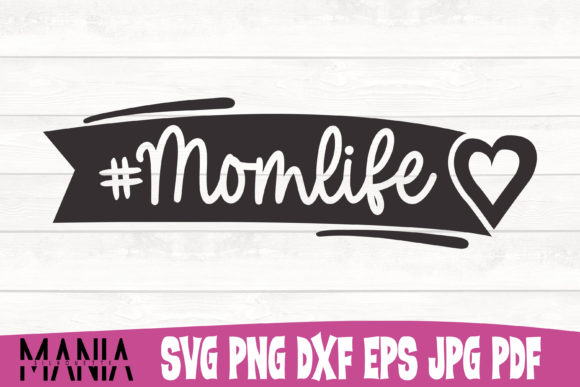
When selecting digital assets for crafting projects, the distinction between a simple graphic and a functional cut file often determines the success of the final product. The Momlife Cut File Design represents a specific category of vector-based artwork tailored for the unique demands of modern cutting machines and apparel customization. Unlike standard raster images found in general stock libraries, this design package is engineered with manufacturing precision. It addresses the common friction points crafters face: disconnected nodes, unorganized layers, and format incompatibility. Understanding the technical composition and practical utility of this pack allows makers to determine if it aligns with their current hardware capabilities and creative objectives.
Technical Composition and Layer Integrity
The primary value proposition of any professional cut file lies in its structural integrity. This Momlife Cut File Design pack includes six distinct file formats, each serving a specific function in the production workflow. While many marketplaces offer single-format downloads, this comprehensive approach mitigates the risk of software incompatibility.
- SVG Files: Designed specifically for Cricut Design Space and Silhouette Studio (Designer Edition). These are scalable vector graphics that maintain crisp edges at any dimension. Crucially, they feature well-defined layers, allowing users to manipulate individual elements without breaking the overall composition.
- PNG Files: Provided with a transparent background, these high-resolution raster images serve as essential references or sublimation assets. They bridge the gap between vector cutting and print-then-cut workflows.
- DXF Files: Essential for users of the basic, free version of Silhouette Studio. DXF acts as a universal exchange format for line art, ensuring accessibility for those who have not upgraded to premium software tiers.
- EPS Files: The industry standard for professional editing in Adobe Illustrator or CorelDRAW. This format preserves bezier curves and node data, enabling deep customization for advanced designers.
- JPEG Files: Optimized for heat transfer and iron-on applications where vector paths are unnecessary. These provide a reliable fallback for non-cutting printing methods.
- PDF Files: A consolidated reference document containing all clip arts. This aids in inventory management and quick visual selection without opening multiple design programs.
The emphasis on "meticulously crafted" and "continuously tested layers" is not merely marketing language; it is a technical necessity. Poorly digitized files often contain overlapping paths or open nodes that cause cutting machines to stall or produce jagged edges. By organizing pieces into defined layers, this design reduces post-processing time, allowing users to focus on assembly rather than repair.
Comparing Vector Flexibility Against Raster Limitations
A critical decision factor for adult crafters is choosing between vector-based cut files and standard raster graphics. The Momlife Cut File Design leverages infinite expandability, a trait exclusive to vector formats like SVG, EPS, and DXF. In practical terms, this means the design can be resized from a small baby onesie decal to a large wall sign without pixelation or loss of fidelity.
In contrast, standard PNG or JPEG alternatives possess fixed resolution limits. Enlarging a raster image beyond its native dimensions results in blurriness, making it unsuitable for varied project scales. While raster files are sufficient for static prints or web use, they lack the mathematical precision required for blade cutting or laser engraving. For users planning to utilize a single design across multiple mediums—such as vinyl decals, cardstock layering, and wood engraving—the vector foundation of this pack offers superior versatility.
However, vectors do have tradeoffs. They are generally limited to solid colors and gradients defined by mathematical paths, whereas rasters excel at photorealistic detail. If the goal is complex photo manipulation rather than shape-based crafting, a dedicated raster resource might be more appropriate. Yet, for the specific niche of "Momlife" themed apparel and decor, which typically relies on typography and silhouette art, vector flexibility remains the optimal choice.
Software Ecosystem and Hardware Compatibility
Digital assets are only as useful as the tools that can read them. This pack distinguishes itself through broad ecosystem compatibility, addressing the fragmented nature of the crafting market. Users must evaluate their existing setup against the provided formats to ensure seamless integration.
Cutting Machine Integration
For owners of Cricut Explore, Maker, or Joy series, the included SVG files offer native plug-and-play functionality. Layers remain separated upon import, facilitating multi-color weeding and material assignment. Silhouette users benefit similarly, with DXF support for Basic Edition and SVG support for Designer/Business Editions. This dual-compatibility removes the barrier often faced when switching between machine brands or collaborating with other makers.
Professional Editing Suites
Beyond hobbyist cutters, the inclusion of EPS and PDF formats extends utility to professional environments. Adobe Illustrator, Photoshop, Flash, and After Effects can all ingest these files. This is particularly relevant for creators producing video content about crafting or designing custom merchandise at scale. Furthermore, compatibility with 3D editing software suggests potential applications in modeling or laser engraving, where 2D paths serve as extrusion bases or etch maps.
Users relying solely on proprietary cartridge systems may find this digital-first approach liberating. Cartridges limit creativity to pre-set designs and require physical storage. Digital files eliminate these constraints, offering complete control over sizing, spacing, and modification without recurring hardware costs.
Assessing Fit: When to Choose This Design Pack
While versatile, no single asset suits every scenario. Evaluating whether the Momlife Cut File Design fits your specific needs requires an honest assessment of your skill level and project goals.
Ideal Use Cases
This pack is best suited for intermediate to advanced makers who understand layer management and material properties. It excels in scenarios requiring:
- Multi-Material Projects: Combining HTV, adhesive vinyl, and cardstock using aligned registration marks.
- Commercial Production: Creating consistent branded merchandise where design integrity must be maintained across hundreds of units.
- Customization: Modifying text, colors, or element placement to personalize gifts or client orders.
- Cross-Platform Workflows: Designing on a desktop in Illustrator and cutting on a Cricut via mobile app.
Potential Limitations and Alternatives
Beginners unfamiliar with vector editing may initially find layered files overwhelming compared to flat, pre-colored images. If your workflow consists exclusively of direct-to-garment printing or sublimation without cutting, the SVG/DXF components may be superfluous, and a high-DPI PNG pack could suffice. Additionally, while the files are compatible with 3D software, they are primarily 2D assets; users seeking fully modeled 3D objects should look elsewhere.
Furthermore, those strictly bound to legacy software versions predating SVG support may need to rely solely on DXF or EPS, potentially losing some layer metadata during conversion. Always verify your software version’s import capabilities before purchase.
Practical Considerations for Quality Assurance
The claim of "no flaws" and "endless printing possibilities" should be validated through testing. Even meticulously crafted files can behave differently depending on material settings and blade condition. Before committing to expensive substrates, users should perform test cuts on scrap material to verify weedability and alignment.
The organization of layers significantly impacts efficiency. Well-defined layers allow for selective visibility toggling, reducing screen clutter during complex assemblies. This organizational structure also facilitates batch processing in automation-capable software like Sure Cuts A Lot or Make The Cut. For users managing high-volume orders, this time-saving aspect often outweighs the initial cost of premium files.
Ultimately, the Momlife Cut File Design serves as a robust foundation for thematic crafting projects. Its strength lies not just in aesthetic appeal, but in technical reliability across diverse platforms. By providing multiple formats and maintaining vector integrity, it bridges the gap between casual hobbyism and professional production. Makers should weigh their specific hardware, software proficiency, and output requirements against these features to make an informed acquisition decision. When aligned correctly, such resources transform digital concepts into tangible, high-quality creations with minimal technical friction.